




Check yourselfHelp now

Self-ruqyah · 01

Theroutine.

Six steps. Each one opens up to show you exactly what to say and do.

Six steps

Openeachstepforexactlywhattosayanddo.

01

A clean start and a quiet heart.

Make wudū’ and settle down

2–3 min
  • Make wudū’ as you would for prayer. If you cannot, ruqyah is still valid — cleanliness helps presence of heart.
  • Sit or lie somewhere quiet. Face the qiblah if you can. Put your phone on silent.
  • Bring your heart to Allah: you are asking Him, and only He cures. The words are the means, not the power.

Say

بِسْمِ ٱللَّهِ

Bismillāh

In the name of Allah.

Once, as you begin

Common mistakes

  • Rushing straight into recitation with the mind elsewhere.
  • Believing the words work ‘by themselves’ — they work by Allah’s permission.
  • Waiting to ‘feel ready’. Start; presence grows with practice.

02

Push the whispers away before you begin.

Seek refuge and open with praise

1 min
  • Say the isti‘ādhah (seeking refuge from shayṭān), then the basmalah.
  • Praise Allah briefly and send ṣalāh on the Prophet ﷺ — du‘ā opened this way is more likely to be answered.
  • If waswās (intrusive thoughts) come during ruqyah, ignore them and continue; that is exactly what they want to stop.

Say

أَعُوذُ بِٱللَّهِ مِنَ ٱلشَّيْطَانِ ٱلرَّجِيمِ

A‘ūdhu billāhi minash-shayṭānir-rajīm

I seek refuge in Allah from the accursed shayṭān.

Once

ٱلْحَمْدُ لِلَّهِ رَبِّ ٱلْعَالَمِينَ، وَٱلصَّلَاةُ وَٱلسَّلَامُ عَلَىٰ رَسُولِ ٱللَّهِ

Al-ḥamdu lillāhi Rabbil-‘ālamīn, waṣ-ṣalātu was-salāmu ‘alā Rasūlillāh

All praise is for Allah, Lord of the worlds; blessings and peace upon the Messenger of Allah.

Once

03

Clearly, with meaning, at your own pace.

Recite the texts over yourself

10–40 min
  • Open the verses & du‘ās (or the PDF). Recite in Arabic if you can; read the meaning so your heart is present. If you cannot read Arabic yet, recite what you know and listen to a recording for the rest.
  • Short on time? Do the ‘5-minute set’: al-Fātiḥah, Āyat al-Kursī, the last two verses of al-Baqarah, the three Quls, and the Prophetic du‘ās. With more time, add the verses on sihr, then work through all 47 passages.
  • Repeat what you can — three or seven times for the short sūrahs is common. Louder is not better; clarity and presence are.
  • Recite over the place of pain with your hand on it.

Say

بِسْمِ ٱللَّهِ أَرْقِيكَ، مِنْ كُلِّ شَيْءٍ يُؤْذِيكَ، مِنْ شَرِّ كُلِّ نَفْسٍ أَوْ عَيْنِ حَاسِدٍ، ٱللَّهُ يَشْفِيكَ، بِسْمِ ٱللَّهِ أَرْقِيكَ

Bismillāhi arqīk, min kulli shay’in yu’dhīk, min sharri kulli nafsin aw ‘ayni ḥāsid, Allāhu yashfīk, bismillāhi arqīk

In the name of Allah I perform ruqyah on you, from everything that harms you, from the evil of every soul or envious eye — may Allah cure you; in the name of Allah I perform ruqyah on you. (When reciting on yourself, say arqī nafsī / yashfīnī.)

Three times

Common mistakes

  • Skipping the meaning — reciting fast with no idea what is being said.
  • Thinking one long session ‘fixes it’. Daily and steady beats long and rare.
  • Stopping because you ‘felt nothing’. Many people feel nothing at all and are still helped.
04

The Sunnah of the Prophet ﷺ every night.

Blow lightly and wipe over the body

1 min
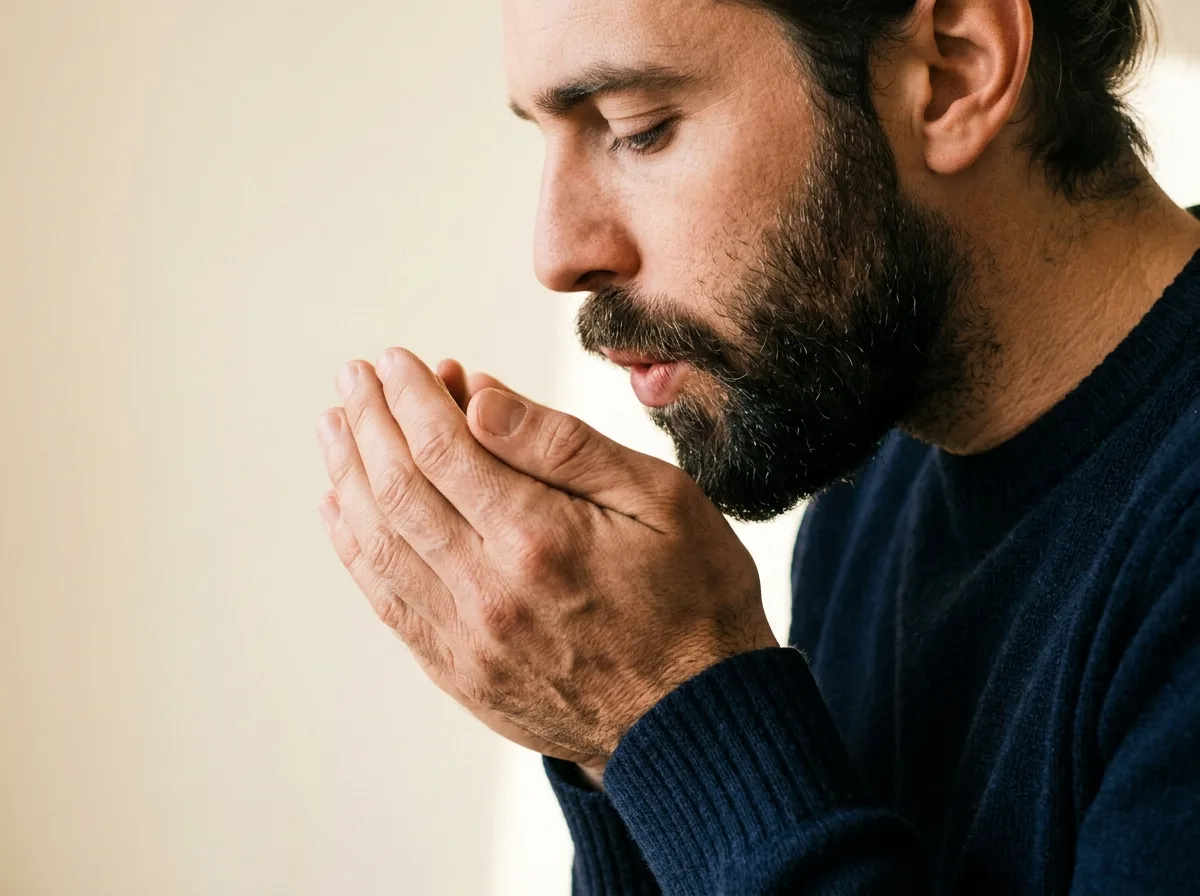
  • After reciting, cup your hands close to your mouth and blow gently — a light breath with a little moisture (nafth), not spitting.
  • Wipe your hands over your head and face, then as much of the front of the body as you can reach, then the rest.
  • The Prophet ﷺ did this with al-Ikhlāṣ, al-Falaq and al-Nās, three times, before sleep.

Say

قُلْ هُوَ ٱللَّهُ أَحَدٌ … قُلْ أَعُوذُ بِرَبِّ ٱلْفَلَقِ … قُلْ أَعُوذُ بِرَبِّ ٱلنَّاسِ

Qul Huwallāhu Aḥad … Qul a‘ūdhu bi-Rabbil-falaq … Qul a‘ūdhu bi-Rabbin-nās

The three Quls (112, 113, 114). Full text in the reader.

Three rounds, blowing and wiping after each

Common mistakes

  • Spitting into the hands — it is a soft breath.
  • Only wiping the face; the Sunnah is head, face and body as far as you can reach.
05

Consistency is the cure’s companion.

Keep it daily and be patient

Every day
  • Morning and evening adhkār every day — they are protection.
  • Ruqyah once a day; twice when unwell. Follow one of the plans on this site to make it a habit.
  • Reactions (yawning, tears, heaviness, heat, vivid dreams) may come and go, or never come. Neither means it is not working.
  • Keep seeing your doctor for anything physical or mental. Ruqyah runs alongside medicine, never instead of it.

Common mistakes

  • Judging results after three days.
  • Comparing yourself to stories online.
  • Going to a ‘healer’ who uses amulets or unknown words when it feels slow. See ‘Is this healer safe?’.
Was this page helpful?

Paused

0:000:00