



Safety: Use pure, food-grade olive oil only; patch-test on the skin, keep it away from the eyes, and stop if irritation appears.
In this article
In short
- 01Allah calls the olive a blessed tree, and the Prophet ﷺ commanded eating its oil and anointing with it.
- 02Recited oil stays on the skin for hours, so the recitation is worn overnight.
- 03Patch-test on the forearm first, keep it out of the eyes and ears, and do not accept oil sold pre-recited.
Olive oil is one of the two things most commonly recited over in ruqyah, alongside water. Allah calls the olive a blessed tree:
يُوقَدُ مِن شَجَرَةٍۢ مُّبَٰرَكَةٍۢ زَيْتُونَةٍۢ لَّا شَرْقِيَّةٍۢ وَلَا غَرْبِيَّةٍۢ يَكَادُ زَيْتُهَا يُضِىٓءُ وَلَوْ لَمْ تَمْسَسْهُ نَارٌۭ
Yūqadu min shajaratin mubārakatin zaytūnatin lā sharqiyyatin wa lā gharbiyyatin yakādu zaytuhā yuḍī’u wa law lam tamsas-hu nār
…lit from [the oil of] a blessed olive tree, neither of the east nor of the west, whose oil would almost glow even if untouched by fire.
The Prophet ﷺ said: “Eat olive oil and anoint yourselves with it, for it is from a blessed tree.” It is recorded by al-Tirmidhi and Ibn Majah from ‘Umar and Abu Usayd; al-Albani graded it authentic, while some earlier scholars noted a break in one of the chains. Either way, eating and applying olive oil is established, and reciting over it combines that with ruqyah, in the same way the Prophet ﷺ blew over water and over his own hands.
Recited oil is useful because it stays on the skin for hours, so the recitation is “worn” overnight, and because massaging it in helps you notice pain, knots and reactions that point to where the affliction sits.
- 1
Choose the oil
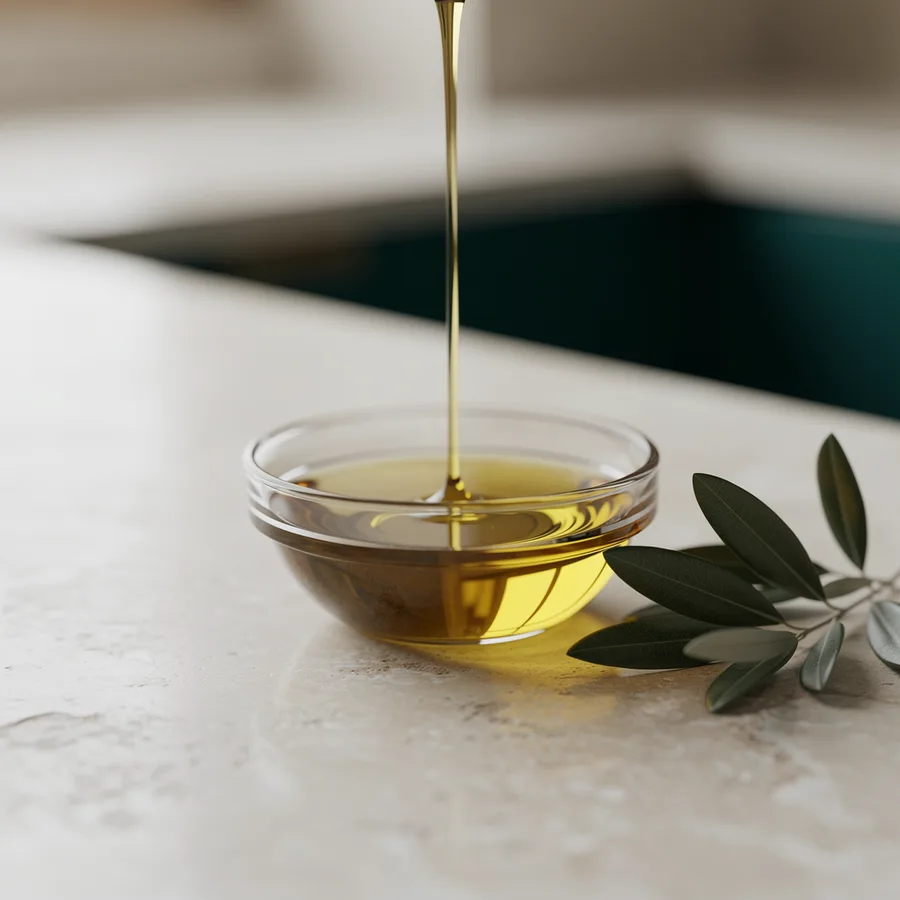
Buy pure olive oil (extra virgin is ideal) in a bottle you keep only for this purpose. Avoid blends, “light” oils and anything perfumed. A 500 ml bottle lasts a couple of weeks for one adult.
- 2
Recite over it
Open the bottle, hold it near your mouth and recite: al-Fātiḥah, Āyat al-Kursī, the last two verses of al-Baqarah, al-Ikhlāṣ, al-Falaq and al-Nās, then the verses of sihr (7:117–122, 10:81–82, 20:69) and any other passages you use in your ruqyah. Blow lightly into the bottle after each surah or at the end. Close it. You may recite over the whole bottle once, or add fresh recitation each night as you pour.
- 3
Apply before sleep
After night prayer and your evening adhkār, pour a little into your palm and rub it over the whole body: head and hair, face (avoiding the eyes), neck, chest, back as far as you can reach, arms, stomach, legs and feet. Say “Bismillāh” and recite the three Quls as you go. A spouse or parent can apply it for a child or the sick.
- 4
Pay attention to reactions
Notice areas that ache, tingle, itch or feel hot while you rub. This is not a diagnosis, but it helps you and your raqi know where to focus recitation and massage. Do not press hard on painful areas.
- 5
Sleep in it, wash in the morning
Wear old, clean nightclothes and use an old sheet or towel on the bed. Leave the oil on overnight and shower in the morning. If you sweat heavily or have very oily skin, apply less rather than more.
- 6
Keep it clean
Pour into your hand; do not dip fingers back into the bottle. Store it closed, away from heat and light. Discard oil that smells rancid.
What to recite
The ruqyah texts
The 47 Quranic passages and the Prophetic du‘ās, with Arabic, transliteration and translation. Open them here without leaving this page, or open the PDF to keep on your phone or print.
How often / how long
Nightly is common during an active treatment plan, or three to four nights a week if daily is not practical. Continue for the length of your plan (typically several weeks) and reduce as symptoms ease. Recite over a fresh bottle at least every couple of weeks, and pray with the intention that Allah places cure in the means He gave you.
Sources
- Quran 24:35
- Jami‘ al-Tirmidhi 1851–1852 and Sunan Ibn Majah 3319 (‘Eat olive oil and anoint yourselves with it, for it is from a blessed tree’) — graded sahih by al-Albani; some earlier scholars considered it mursal
- Sahih al-Bukhari 5751 (nafth in ruqyah)
- Ibn al-Qayyim, Zād al-Ma‘ād, on olive oil

Black seed (ḥabbat al-sawdā’)
The seed the Prophet ﷺ described as a cure for every disease except death, and how to take it sensibly as part of a ruqyah routine.
Read