


Safety: Small daily amounts only; avoid medicinal doses in pregnancy, on blood-thinning or diabetes medication, and for small children without medical advice.
In this article
In short
- 01The hadith is in both Bukhari and Muslim: in the black seed there is a cure for every disease except al-sām, death.
- 02Black seed has no special connection to sihr or jinn; it is a general strengthening food from the Sunnah.
- 03Food amounts only. Avoid medicinal doses in pregnancy, on blood-thinning or diabetes medication, and for small children without medical advice.
Black seed (Nigella sativa, called ḥabbat al-sawdā’ or shūnīz) is one of the few remedies with a clear, authentic text from the Prophet ﷺ. He said: “In the black seed there is a cure for every disease except al-sām,” and al-sām, he explained, is death. The hadith is in both Bukhari and Muslim from Abu Hurayrah.
The scholars understood “every disease” in the sense of it being a broad, beneficial medicine, not that a spoon of seeds replaces every treatment. Ibn Hajar noted that it may be a cure for a disease on its own, or in combination with other things, and that the way of taking it differs from illness to illness. Ibn al-Qayyim listed many uses, most of them for the stomach, chest and skin.
Black seed has no special connection to sihr or jinn; it is a general strengthening food from the Sunnah. In ruqyah it is used because a body that is well-nourished and healthy copes better, and because taking it with the intention of following the Prophet ﷺ is itself an act of worship and trust in Allah.
- 1
Buy good seed
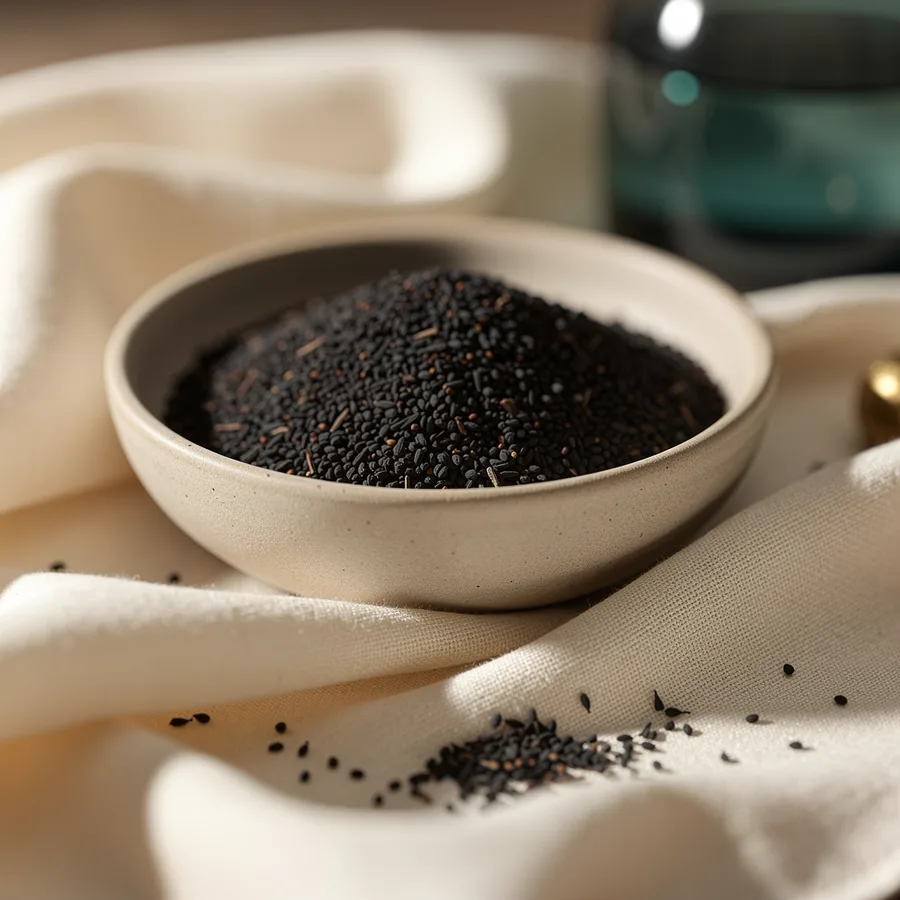
Look for whole, dry, matte-black seeds with a peppery smell, from a spice shop or a reputable brand. For oil, choose cold-pressed, unrefined black seed oil in a dark bottle. Avoid capsules or oils that do not state the source and any product claiming to “treat sihr”.
- 2
Whole seeds
Take a small pinch (around half to one level teaspoon a day), chewed or swallowed with water, ideally after food. Some grind the seed lightly and mix it into yoghurt or dates. Chewing releases the taste; the seed is easier on the stomach if you eat it with food.
- 3
Oil
For adults, half a teaspoon to one teaspoon daily is a sensible ceiling. It can be taken on its own, mixed into a spoon of honey, or stirred into warm (not hot) water. It can also be rubbed on the chest and back or added to recited olive oil for the body.
- 4
With honey
A common and pleasant way is to mix ground seed or oil into a spoon of honey and take it in the morning. If you use recited honey, this pairs two Sunnah foods in one; recite over the mixture as you would over water if you wish.
- 5
Take it with intention
Say “Bismillāh” before taking it, and remember the hadith. Whatever benefit comes is by Allah’s permission through a means His Messenger ﷺ pointed to. Intention matters more than quantity.
- 6
Watch for reactions
Start with a small amount for the first week. Mild stomach upset or heartburn means take less and always with food. Stop if you notice a rash, swelling or any allergic sign.
What to recite
The ruqyah texts
The 47 Quranic passages and the Prophetic du‘ās, with Arabic, transliteration and translation. Open them here without leaving this page, or open the PDF to keep on your phone or print.
How often / how long
Once a day, every day, is enough; there is no benefit in exceeding a couple of teaspoons. Many people take it long-term as a habit rather than as a “course”. During a ruqyah plan it is part of the daily routine (morning adhkār, recited water, a spoon of black seed and honey) and does not need to be increased when symptoms flare.
Sources
- Sahih al-Bukhari 5688 and Sahih Muslim 2215 (‘In the black seed there is a cure for every disease except death’)
- Ibn al-Qayyim, Zād al-Ma‘ād, on ḥabbat al-sawdā’
- Ibn Hajar, Fath al-Bari, commentary on the hadith of the black seed

Honey
Honey is named as a healing in the Quran and prescribed by the Prophet ﷺ, and how to use plain and recited honey in a ruqyah routine.
Read