


In this article
In short
- 01A tamimah is anything hung on a person, child, animal or property to ward off harm or attract good.
- 02The Prophet ﷺ said “whoever hangs an amulet has committed shirk”, and did not exclude the kind that carries Quran.
- 03The stronger view, followed here, is that amulets are avoided altogether — including Quranic ones.
- 04Writing verses with a pure substance, washing them off and drinking the water is a different act, and the verifying scholars permit it.
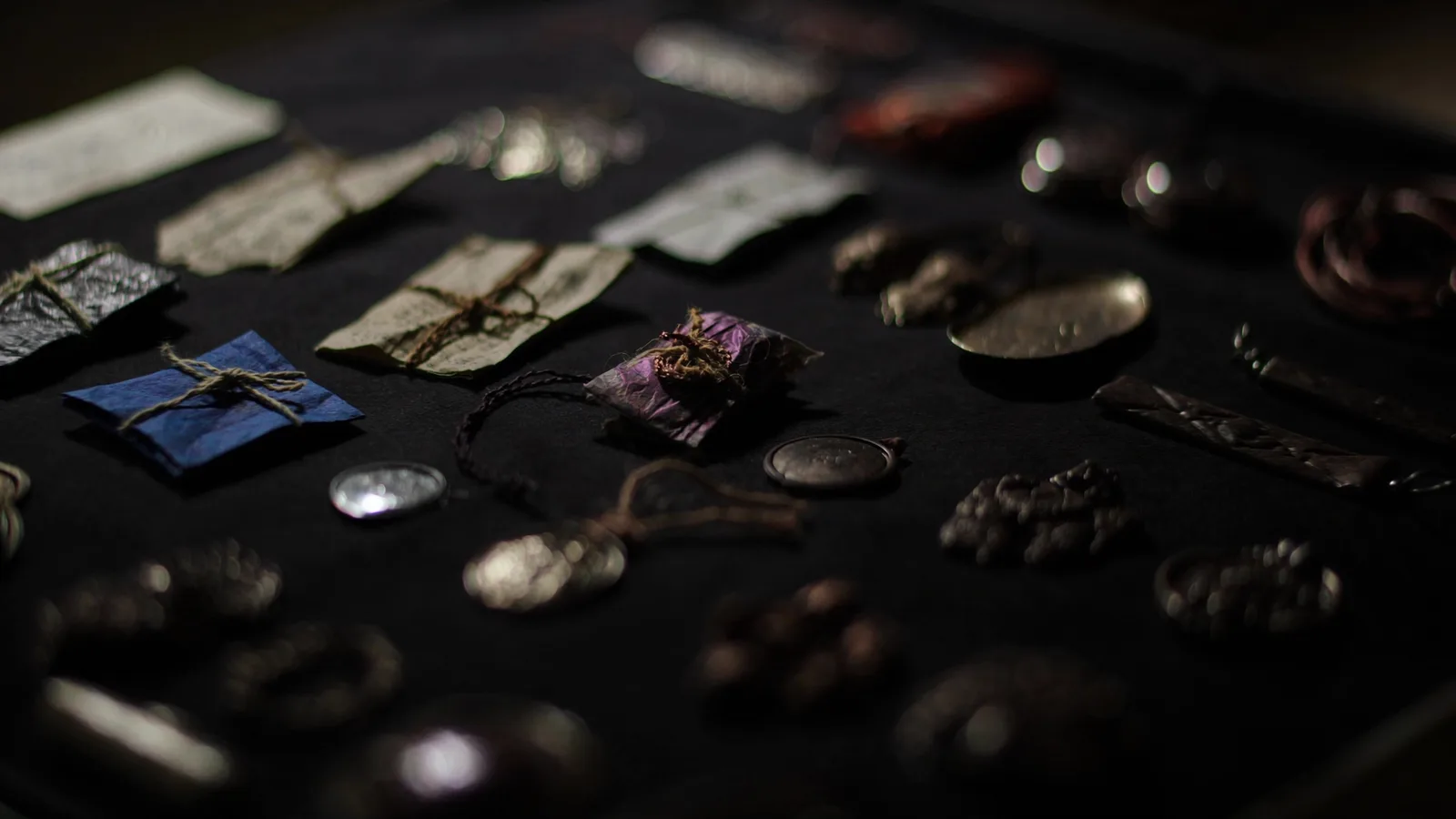
Almost every Muslim culture has a version of it. A folded paper in a leather pouch on a baby’s arm. A black thread around a wrist. A blue bead against the eye. A small metal case with a verse inside, hung above the door or on the rear-view mirror. A ta‘wīdh from the village imam, sewn into the lining of a jacket. They are given with love, usually by grandmothers, and it feels ungrateful to question them.
But questioning them is what the Prophet ﷺ and his Companions did, and the language they used was not soft. This article sets out what the texts say, where scholars differed, and why the position followed on this site is that amulets should be avoided altogether, including those containing Quran.
What the words mean
A tamimah (plural tamā’im) is anything hung on a person, child, animal or property to ward off harm or attract good: beads, bones, shells, threads, metal charms, written papers. Ta‘wīdh is the South Asian and Persian word for the written kind. Hirz and hijab are used in other regions. The Arabs of jahiliyyah hung them on children against the evil eye and on camels against harm on the road, and that is the setting the hadith address.
The texts
‘Uqbah ibn ‘Amir reports that a group of men came to the Prophet ﷺ to give the pledge of allegiance. He accepted nine and held back from one. When asked why, he said the man had an amulet on him. The man cut it off, and the Prophet ﷺ accepted his pledge and said: whoever hangs an amulet has committed shirk (Ahmad).
In another narration from ‘Uqbah, the Prophet ﷺ said: whoever hangs a tamimah, may Allah not fulfil his need for him, and whoever hangs a wada‘ah (a sea-shell charm) may Allah not give him rest (Ahmad, al-Hakim). It is a supplication against the very thing the person hoped the amulet would bring.
Ibn Mas‘ud reports the Prophet ﷺ saying that (shirk-type) ruqyah, tamā’im and tiwalah (love charms) are shirk (Abu Dawud, Ibn Majah, Ahmad). And in Sahih al-Bukhari, the Prophet ﷺ sent a messenger during a journey with the instruction that no string necklace should remain on the neck of any camel without being cut.
Taken together, the picture is clear: hanging things for protection was a widespread practice, and the Prophet ﷺ uprooted it and called it by the name of shirk.
Why shirk?
Because a person who hangs an amulet has attached his heart to the object. He believes, at some level, that the thread or the bead or the paper is doing something. If he believes it protects by itself, that is major shirk. If he believes Allah protects but has made the object a means that Allah never appointed, that is minor shirk: he has taken as a cause what is not a cause, and that is a door to the greater. Ibn ‘Uthaymīn explains it this way in his commentary on Kitab al-Tawhid.
وَإِن يَمْسَسْكَ ٱللَّهُ بِضُرٍّۢ فَلَا كَاشِفَ لَهُۥٓ إِلَّا هُوَ ۖ وَإِن يَمْسَسْكَ بِخَيْرٍۢ فَهُوَ عَلَىٰ كُلِّ شَىْءٍۢ قَدِيرٌۭ
Wa in yamsaska Llāhu bi-ḍurrin falā kāshifa lahū illā huwa, wa in yamsaska bi-khayrin fahuwa ‘alā kulli shay’in qadīr
And if Allah should touch you with adversity, there is no remover of it except Him. And if He touches you with good – then He is over all things competent.
The believer’s protection is his tawakkul, his adhkār, and the du‘ās the Prophet ﷺ taught to be said, not worn.
Amulets that contain nothing but Quran
The scholars differ here, honestly.
Some of the salaf, including a narration from ‘Abdullah ibn ‘Amr ibn al-‘As and one view attributed to Imam Ahmad, permitted hanging something on which only Quran or the names of Allah were written. Their reasoning: the Quran is a healing, and the general prohibition on tamā’im was aimed at the amulets of shirk.
Others, including Ibn Mas‘ud, Hudhayfah, ‘Uqbah ibn ‘Amir and Ibn ‘Abbas among the Companions, and the majority of the scholars of Najd, Ibn Bāz and Ibn ‘Uthaymīn among the moderns, held that they are also prohibited. This is the stronger view, and it is the one followed here, for four reasons:
- 1The prohibition is generalThe Prophet ﷺ said “whoever hangs an amulet” and did not exclude the Quranic kind. If Quranic amulets were permitted, they would have been the obvious exception to mention, and none of the Companions who hung anything reported him permitting it.
- 2Sadd al-dhara’i‘, blocking the meansIf Quranic amulets are allowed, the door is open. Nobody checks what is inside the pouch. The sorcerer writes an ayah on top and his squares and symbols underneath, and the mother believes she is hanging Quran on her child. Prohibiting the whole category closes the door the sorcerers walk through.
- 3Humiliation of the QuranThe amulet goes with the person into the toilet, is worn during intimacy, is soaked in sweat, is dropped, is worn by a child who has just soiled herself. The Quran deserves better than a leather pouch on an ankle.
- 4Resemblance to the practice of shirkEven if the content is pure, the form is the form of the jahiliyyah amulet, and outsiders cannot tell the difference. The Sharī‘ah closes off what resembles shirk in appearance.
Ibn ‘Uthaymīn adds that there is no evidence from the Prophet ﷺ or the Companions that they hung Quran, though the need for protection existed then as now. Had it been good, they would have been the first to it.
What about a Quran in the car, or a frame on the wall?
Keeping a mushaf in your bag to read from is not an amulet. Hanging Āyat al-Kursī on the wall as calligraphy is not, by itself, an amulet either, though scholars have advised against it if the intention becomes “this protects the house”. The distinction is intention and use: is it there to be recited and reflected on, or is it there because you believe the object wards off harm? Be honest with yourself about which it is.
What to do with the ones you have
- 1
Remove them
If you or your family have amulets, take them off, and take them down. - 2
Dispose of anything containing Quran respectfully
Unpick it, dissolve the ink in water, or bury the paper somewhere clean. - 3
Destroy anything containing symbols, numbers or unreadable writing
Do not keep them “just in case”; that is the attachment the hadith is warning about. - 4
Replace them with what the Prophet ﷺ gave us
He used to seek refuge for al-Hasan and al-Husayn with the words: I seek refuge for you both in the perfect words of Allah from every devil and poisonous creature and from every evil eye (Bukhari). Say it over your children morning and evening. Teach them al-Falaq and al-Nās. Recite Āyat al-Kursī before sleep. This is the protection Allah appointed, and it costs nothing, and nobody can tamper with it.
What this looks like in Britain now
A ruling on an abstract practice is easy to agree with, and easy to agree with without noticing that it applies to you.
The object is a small folded paper carrying selected Quranic words or verses, or the names of Allah, or supplications — sewn into a cloth or leather pouch, or set in a small metal case. Worn round the neck, on the arm, pinned inside clothing, hung in the car or above a door. In South Asia it is a ta‘wīdh, often written taweez; elsewhere the same object is a ḥirz or a ḥijāb; the Arabic sources call the whole class tamā’im.
And it is sold here. British websites offer them for health, for protection from the eye, for marriage, for family problems — including, in the listings, for an obedient husband — delivered to UK addresses.
Somebody who reads that amulets are forbidden and pictures a foreign village custom will not connect it to the leather pouch a grandmother sewed into a child’s jacket, or the case hanging from a rear-view mirror, or a purchase made last month with a checkout page. The ruling and the object have to be introduced to one another.
The practice is also older than the defence usually offered for it: it is close to the exact practice the texts addressed at the beginning.
One thing this page should not be read as forbidding: writing verses with a pure substance, washing them off and drinking the water is a different act from writing to hang and wear, and the verifying scholars permit it. See erasure water.
Medical first, alongside ruqyah — nothing here replaces a doctor’s care.
Sources
- Musnad Ahmad, hadith of ‘Uqbah ibn ‘Amir: whoever hangs an amulet has committed shirk
- Musnad Ahmad and al-Mustadrak of al-Hakim, hadith of ‘Uqbah ibn ‘Amir: whoever hangs a tamimah, may Allah not fulfil his need
- Sahih Muslim, hadith of Ibn Mas‘ud: ruqyah (of the shirk kind), tamā’im and tiwalah are shirk
- Sahih al-Bukhari, Book of Jihad: the order to cut every string necklace from the necks of camels
- Muhammad ibn ‘Abd al-Wahhab, Kitab al-Tawhid, chapter on ruqyah and amulets, with the commentaries of Ibn Uthaymeen (al-Qawl al-Mufid) and Sulayman ibn ‘Abdillah (Taysir al-‘Aziz al-Hamid)
- Ibn Baz, Majmu‘ Fatawa, ruling on amulets containing Quran

Is ruqyah only for the possessed?
Six common misunderstandings about ruqyah, gently corrected: who it is for, who may do it, what reactions mean, and how it sits alongside medicine.
Read