



In this article
In short
- 01Medical first, alongside ruqyah. Nothing here replaces a doctor, and any real illness needs real medical care.
- 02Treatment follows two paths, and which one you are on depends only on whether the caster is known.
- 03Two methods near the end (pressing, induced vomiting) are documentation of what the sources mention, not instructions, and some are dangerous.
Two situations
Treatment of the eye and ḥasad follows two paths, depending on whether the caster is known.
Do you know who cast the eye?
- YesSituation 1: the caster is known or suspectedThe best of all cures: the caster performs wuḍū’, and the afflicted person washes with that water.
- NoSituation 2: the caster is unknownStrive with everything permissible: persist with the Quran, persist with du‘ā, and use the permitted remedies.
Situation 1: the caster is known or suspected
The washing method: the caster’s wuḍū’ water
The best of all cures when the caster is known. ‘A’ishah, may Allah be pleased with her, said: “The caster of the eye would be ordered to perform wuḍū’, and the afflicted person would then wash with that water” (Abu Dawud 3880). Ibn al-Qayyim writes in Zād al-Ma‘ād (4/157): “This is something the medicine of the doctors cannot reach; and it does not benefit the one who denies it, mocks it, doubts it, or does it as a mere experiment without believing that it can benefit.”
Taking the trace (athar) when the caster refuses
In our time the caster usually refuses to cooperate; asking can even cause a family rift. Practitioner sources describe the tried alternative, which rests on experience free of anything shirk or forbidden: take something of the caster’s clothing that has touched his sweat (a cap, an undershirt, a thobe) and soak it in water; the afflicted person drinks a little and washes with the rest, or washes a limb with it. The same is done with the remainder of his drink (water, coffee) or date stones that touched his saliva: they are rinsed in water, some is drunk and the rest used for washing. The source reports this has been tried from old times to our own day, with immediate results.
Burning a scrap of the caster’s clothing (the source defends it)
The source relates a case its author knew first-hand: a brother was struck by an eye that left him in a coma, waking only rarely to pray his gathered prayers before sinking back. His family knew the woman whose eye had struck him and knew she would never do wuḍū’ for him, so they quietly cut a small piece from her clothing without her knowledge and burned it as incense near him. He leapt up out of his coma, standing at full strength.
To those who object that this is not valid, the source answers: the objection has no evidence, because the hadith shows the permissibility of treating with anything that is neither shirk nor forbidden; the method is widespread among people and has its effect, perhaps (it suggests) through the rising smoke mixed with the trace of the caster reaching the afflicted; and Allah knows best. It is recorded here as that practitioner’s position and story. It is not something this site tells you to do; burning anything indoors also carries an obvious ordinary fire risk.
If there are several suspects
Some people say “I suspect this person and that person.” In that case one gathers the wuḍū’ water of as many of them as possible and washes with it. The source gives an example: a schoolgirl collapsed at school because of an eye, and the headmistress ordered every girl to do wuḍū’ and poured the collected water over her, and she stood up well. The same is done among relatives.
Ruqyah with the Quran and du‘ā
In the two Sahihs, ‘A’ishah said: “The Prophet ﷺ commanded me — or commanded — that we use ruqyah against the eye.” And al-Tirmidhi records that Asmā’ bint ‘Umays said: “O Messenger of Allah, the children of Ja‘far are struck by the eye — shall I seek ruqyah for them?” He said: “Yes, for if anything could have outrun the decree, the eye would have outrun it” (Tirmidhi 2059, graded hasan sahih by al-Tirmidhi).
Ibn Hajar records in Fath al-Bari the scholars’ consensus that ruqyah is permitted when three conditions come together:
- It is done with the words of Allah, or with His names and attributes;
- It is in Arabic, or in words whose meaning is understood;
- It is believed that the ruqyah has no effect by itself, but only by the decree of Allah, Mighty and Majestic.
And the whole Quran is a cure. Ibn al-Qayyim writes in Zād al-Ma‘ād: “The Quran is the complete cure for all diseases of the heart and body, and the diseases of this world and the next — though not everyone is granted the ability or the success to be healed by it… There is no disease of the hearts or the bodies but the Quran contains the way to its remedy, its cause, and the protection from it — for the one whom Allah grants understanding of His Book.”
Ruqyah with du‘ās, good words and everything permissible is likewise allowed, along with treatment methods free of shirk that have been tried and found beneficial, by Allah’s permission. You will find the ruqyah verses for the eye and ḥasad, with audio, in this site’s library, for reading over yourself or over an afflicted person.
Situation 2: the caster is unknown
Then strive with everything permissible: persist with the Quran, persist with du‘ā, and use the permitted remedies below.
Treating the eye with medicine and remedies
The source holds that the eye can be treated through medicine, and that this is established and observed in old and modern medicine alike. Just as washing with the caster’s water involves no Quran or du‘ā yet benefits, so too remedies: some are forbidden or shirk, and some are permissible with no shirk in them, and there is no harm in using those. The Prophet ﷺ said:
إِنَّ اللَّهَ تَعَالَى خَلَقَ الدَّاءَ وَالدَّوَاءَ فَتَدَاوَوْا وَلَا تَتَدَاوَوْا بِحَرَامٍ
"Allah, Exalted is He, created the disease and the cure — so treat yourselves, but do not treat yourselves with what is forbidden."
1. Zamzam water
Drinking Zamzam water and seeking healing through it. Ibn Khuzaymah was asked, “From where did you acquire your knowledge?” He replied with the hadith: “Zamzam water is for whatever it is drunk for”, and said, “When I drank it, I asked Allah for beneficial knowledge.” Ibn al-Qayyim writes in Zād al-Ma‘ād: “The hadith is hasan; some declared it sahih and some declared it fabricated, and both verdicts are rash. I and others have experienced wondrous things in seeking healing through Zamzam water; I sought healing through it from a number of illnesses, and I was cured by Allah’s permission.”
2. Olive oil
…يُوقَدُ مِن شَجَرَةٍۢ مُّبَٰرَكَةٍۢ زَيْتُونَةٍۢ لَّا شَرْقِيَّةٍۢ وَلَا غَرْبِيَّةٍۢ…
yūqadu min shajaratin mubārakatin zaytūnatin lā sharqiyyatin wa lā gharbiyyah
"…lit from [the oil of] a blessed olive tree, neither of the east nor of the west…"
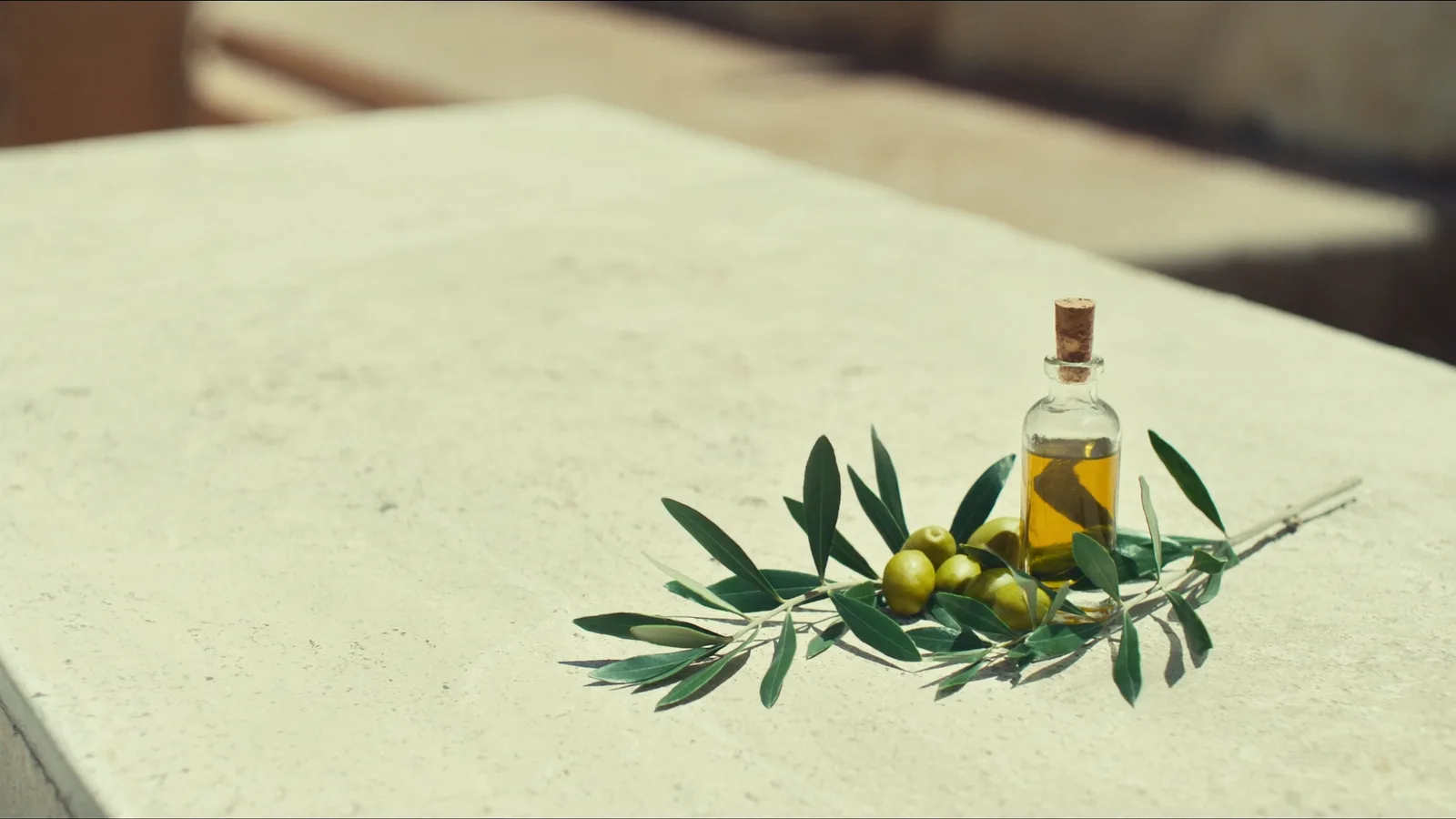
Oil of a blessed tree, especially when the Quran has been recited into it, joining the barakah of the tree to the barakah of the Quran. It is used as ointment and eaten. Experienced raqis report that generous, repeated anointing of the body (three to ten times) has the greatest effect: a light coating of the whole body, including the private parts, until symptoms disappear, continuing even if strong pains appear, for they soon pass. Repetition over the whole body, they say, is what brings the case out and strengthens the effect, whether eye, mass or sihr.
3. Honey
…يَخْرُجُ مِنۢ بُطُونِهَا شَرَابٌۭ مُّخْتَلِفٌ أَلْوَٰنُهُۥ فِيهِ شِفَآءٌۭ لِّلنَّاسِ…
yakhruju min buṭūnihā sharābun mukhtalifun alwānuhu fīhi shifā'un lin-nās
"There emerges from their bellies a drink, varying in colors, in which there is healing for people."
Eaten, applied to the places of affliction, or two large spoons dissolved in a cup of warm water drunk on an empty stomach; recited-over honey is best, to join the benefit of the honey and the benefit of the recitation. However it is used, there is benefit in it by Allah’s permission.
4. Herbs matched to the affliction
Some herbal remedies are chosen to match where the eye struck. For example, if the eye or ḥasad affected a person’s sight, benefit is found in kohl of ithmid (antimony), honey, aloes, or truffle, and so on.
5. Black seed
إِنَّ فِي الْحَبَّةِ السَّوْدَاءِ شِفَاءً مِنْ كُلِّ دَاءٍ إِلَّا السَّامَ
"Indeed, in the black seed there is healing from every disease, except al-sām [death]."
Used as a drink, as incense, as steam over water, as ointment, and in washing. Ibn al-Qayyim devotes a long passage to it in Zād al-Ma‘ād (4/272), written in the classical Galenic medicine of his era (hot and dry in the third degree, dispelling wind and blockages), and listing dozens of preparations:
- ground with honey and warm water for kidney and bladder stones;
- heated with vinegar for skin complaints;
- its oil for coughs and breathlessness;
- drops for colds with sneezing;
- poultices for headache;
and much more, ending with his caution that “a group claimed that taking too much of it is lethal.” The passage is premodern medicine, quoted by the source for the seed’s pedigree. Read it as heritage, not as a pharmacology manual, and treat any real illness with a doctor.
6. Senna
The Prophet ﷺ said: “Hold to senna and sannūt, for in them is a cure for every disease except al-sām”, that is, death (Sahih al-Jami‘ 4067). Ibn al-Qayyim says of senna (Zād al-Ma‘ād 4/67) that it eases the humours, strengthens the heart, and is of particular benefit against melancholic waswasa, cracking of the body, hair loss, lice, chronic headache, scabies, pimples, itching and epilepsy: again, classical medicine, quoted as the source quotes it.
7. Salt
A small spoon of salt in a cup of warm recited-over water, drunk on an empty stomach, or used in washing. Ibn al-Qayyim discusses its benefits in Zād al-Ma‘ād (4/165).
The Rumi bath: a seven-day course
Sheikh Muhammad ibn Ibrahim al-Rumi described a seven-day bathing course of ground sidr, alum and salt that experienced raqis have tried and found beneficial for the eye and other afflictions, by Allah’s permission. The full recipe, how to use it, and the honest notes that belong with it have their own page in Cures: “The Rumi bath — how to make it”.
8. Hijamah (cupping)
The Prophet ﷺ said: “Jibril informed me that cupping is the most beneficial thing people treat themselves with” (Sahih al-Jami‘ 218). And: “Whoever is cupped on the seventeenth, nineteenth or twenty-first of the month, it is a cure for every disease” (Sahih al-Jami‘ 5968). The source reports wondrous benefit from it in the eye and sihr, with one firm caution of its own: do not overdo it. Some patients cup every spot the pain moves to until they disfigure their bodies; cupping should be by necessity and need.
Its advice to cuppers: before cupping, make sure of the cause of the illness. If it is mass or sihr, begin with ruqyah, then cup, unless something clearly calls for both. Use only a licensed, hygienic practitioner.
9. Pressing and massage (tamrīkh), a practitioner method
Pressing on the body, with recitation or without it (with recitation being better). The source reports that with the pressing, swellings may appear on the body, or the patient may vomit or belch repeatedly. This is a practitioner’s technique observed in ruqyah settings, not a self-treatment; pressure applied wrongly can injure. It is recorded here as description, not instruction.
10. Induced vomiting: what the classical source mentions
Ibn al-Qayyim writes (Zād al-Ma‘ād 4/120), in the medical idiom of his time, that vomiting cleanses and strengthens the stomach, sharpens the sight, relieves heaviness of the head, and benefits chronic conditions, and that a healthy person might use it twice a month. The source adds that it benefits in some cases by Allah’s permission. Safety note: deliberately induced vomiting is not a safe practice by modern medical understanding: it damages the throat, teeth and stomach and can become disordered behaviour. This item is classical documentation only. Do not practise it.
11. Fumigation with herbs, and the two fatwas of Ibn Bāz
On fumigating the afflicted person with alum or herbs, two answers are recorded from Sheikh Ibn Bāz, and the source gives both.
First fatwa (no. 4393, 25/2/1402 AH): It is not permissible to treat the eye with what was mentioned, for these are not among the ordinary means of treating it — and the intent behind this fumigation may be the appeasement of the devils among the jinn and seeking their help for a cure. It is treated instead with the lawful ruqyahs and the like, as established in the authentic hadiths.
Second answer: Asked about readers who prescribe herbalists’ preparations placed on embers to fumigate the patient and the rooms of the house, such as alum, he answered: if it proves beneficial, there is no harm — most medicine is by experience. If things are found that benefit people by experience — incense, oils or drinks — there is no harm, for medicine is not restricted to revealed texts; on condition that it is not impure and not forbidden in the Shariah.
Read together: fumigation done as appeasement of the jinn, or brought from sorcerers, is forbidden; plain permissible substances used purely as tried remedies, with no shirk attached, are allowed. (Ibn Jibrīn’s fatwa says the same; see the forbidden-treatments page.)
The source ends by noting that these are only a summary: there are many more permitted means, and the door of everything permissible stands open. The heart of the matter remains what it was at the start: the caster’s washing water when he is known, and the Quran and du‘ā always, with honest medicine taken alongside, never abandoned. Du‘ā and Quran heal by Allah’s permission. No method is guaranteed.
Sources
- Ibn al-Qayyim, Zad al-Ma'ad — on treating the eye and the prophetic remedies (4/120, 4/157, 4/165, 4/272)
- Ibn Hajar, Fath al-Bari — the conditions of permissible ruqyah
- Hadith collections: Abu Dawud 3880, al-Tirmidhi 2059, Muslim 2215, Sahih al-Jami'
- Fatwas of Sheikh Ibn Baz on fumigation (no. 4393 and a later answer); Sheikh Ibn Jibrin
- Classical and practitioner sources — see Methodology → Our sources

Treating sihr — the lawful ways, and the ways that are forbidden
Medical care comes first, alongside ruqyah.
Read