



In this article
In short
- 01Every one of these fails the three conditions of lawful ruqyah: Allah’s words or names, understood language, and the belief that no cure has effect except by Allah’s decree.
- 02The pattern across all seven: the words of Allah used as raw material for magic, or created things trusted in place of the Creator.
- 03They are listed so you can recognise them, avoid them, and warn against them.
- 04Whoever is afflicted already has everything lawful: ruqyah, the caster’s wuḍū’ water, du‘ā, charity, and permitted remedies.
The same Prophet ﷺ who told us to treat ourselves also drew the line on how:
إِنَّ اللَّهَ تَعَالَى خَلَقَ الدَّاءَ وَالدَّوَاءَ فَتَدَاوَوْا وَلَا تَتَدَاوَوْا بِحَرَامٍ
"Allah, Exalted is He, created the disease and the cure — so treat yourselves, but do not treat yourselves with what is forbidden."
There are ‘treatments’ in circulation for the harm of the eye and ḥasad — some used as cure, some as prevention — that are forbidden in the Sharī‘ah, and some reach the level of shirk. They are listed here so you can recognise them, avoid them, and warn against them. Every one of them fails the three conditions of lawful ruqyah: Allah’s words or names, understood language, and the belief that no cure has effect except by Allah’s decree.
- 1Written amulets and shirk incantationsIts makers claim it is part of the religion, and the religion is innocent of it
- 2Fumigation from sorcerers, or done to attract jinnWhat the scholars condemned is its accompaniment by incantations of disbelief
- 3Visiting shrines and graves to seek healingHealing is asked from Allah alone
- 4Beads, hung objects, strings, knots and horseshoesNone of it can benefit or harm; trusting in it is the disease
- 5Going to sorcerers and fortune-tellersRemoving a harm through shirk trades a bruise for a wound
- 6Washing with the caster's urine or filthTreatment with impurity is not allowed
- 7Dhikr in special counts to summon 'servants'The words sound holy. The mechanism is sorcery
1. Written amulets and shirk incantations
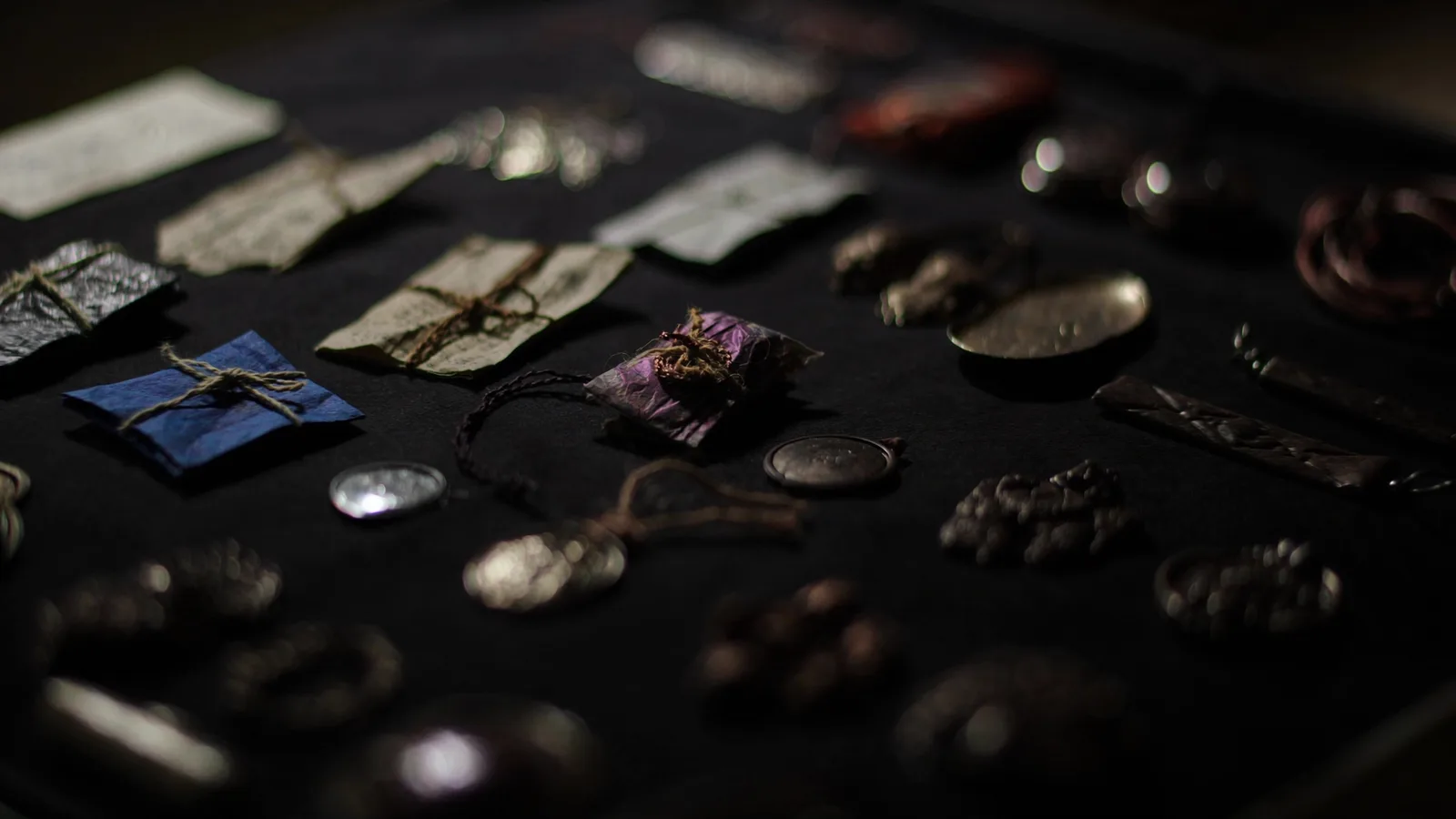
Hanging written amulets, also called hijab or hirz. This includes incantations in unintelligible or non-Arabic words mixed in with Quranic verses; verses written cut up and rearranged; verses converted into number-squares and calculations; and dhikr repeated in specific counts claimed to summon “servants” (jinn helpers). Its makers claim all this is part of the religion, and the religion is innocent of it.
2. Fumigation from sorcerers, or done to attract jinn
Fumigating with herbs accompanied by mutterings of disbelief or unintelligible words, or with substances brought from sorcerers, is forbidden. Ibn Jibrīn’s clarification is recorded: if it is plain fumigation with herbs that are not in themselves forbidden, done on their own with nothing of shirk mixed in, and with no belief beyond their being a tried means of affecting that evil presence, then there is no harm in it. What the scholars condemned in fumigation is only its accompaniment by the incantations of disbelief through which the devils are appeased.
3. Visiting shrines and graves to seek healing
Going to shrines and to the graves of the righteous (or even of the prophets) to ask for cure. Healing is asked from Allah alone.
4. Beads, hung objects, strings, knots and horseshoes
Hanging anything to repel the eye, on a person, an animal or a house. The source’s own list of what people hang: a horseshoe, garlic, dog droppings, animal horns or parts such as a claw or a head, a single upturned shoe, pieces of wood, or metals. None of it can benefit or harm; trusting in it is the disease.
5. Going to sorcerers and fortune-tellers
Resorting to sorcerers, devils and charlatans to seek a cure. Removing a harm through shirk trades a bruise for a wound.
6. Washing with the caster’s urine or filth
Some folk practice takes the lawful washing method (the caster’s wuḍū’ water — see the permitted treatments) and corrupts it into washing with the caster’s urine or other filth. This is forbidden: treatment with impurity is not allowed.
7. Dhikr in special counts to summon ‘servants’
Remembrance of Allah and tasbih repeated in contrived numbers for the purpose of attracting the “servants”, that is, devils, to help repel the eye. The words sound holy. The mechanism is sorcery.
The pattern across all seven: the words of Allah used as raw material for magic, or created things trusted in place of the Creator. Whoever is afflicted already has everything lawful: ruqyah that meets the three conditions, the caster’s wuḍū’ water, du‘ā, charity, and permitted remedies; see the permitted-treatments page.
Medical first, alongside ruqyah — nothing here replaces a doctor’s care.
Sources
- Sahih al-Jami' 1762 — "do not treat yourselves with what is forbidden"
- Sheikh Ibn Jibrin's clarification on fumigation
- Classical and practitioner sources — see Methodology → Our sources

How seriously Islam takes sorcery — the classical ruling on sihr and the sorcerer
The classical law books rank sorcery among the gravest crimes a person can commit, and debated its penalties with the gravity they gave to murder.
Read